Free shipping
over 20+ countries
Online customer service
24 hours online support
Payment method
Stripe & Credit card
Why do we call
玉芳閣 · YU FANG GE
YU FANG GE (玉芳阁) is inspired by traditional Chinese culture.
YU (玉) represents jade, a symbol of beauty and virtue.
FANG (芳) means fragrance, often associated with elegance.
GE (阁) refers to a pavilion, symbolizing a treasure house of culture.
At the same time, “Yu Fang” is also a homophone of our founder’s name, carrying a personal connection to this brand.
✨We hope that our website serves as a small treasure cabinet of traditional Chinese culture, where you can discover exquisite Chinese-style bags, handcrafted jewelry, and more.
Traditional Chinese Product
Chinese traditional handicrafts
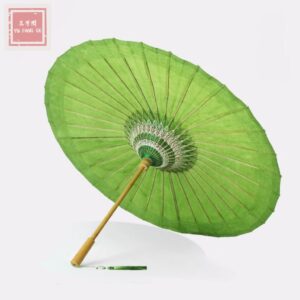
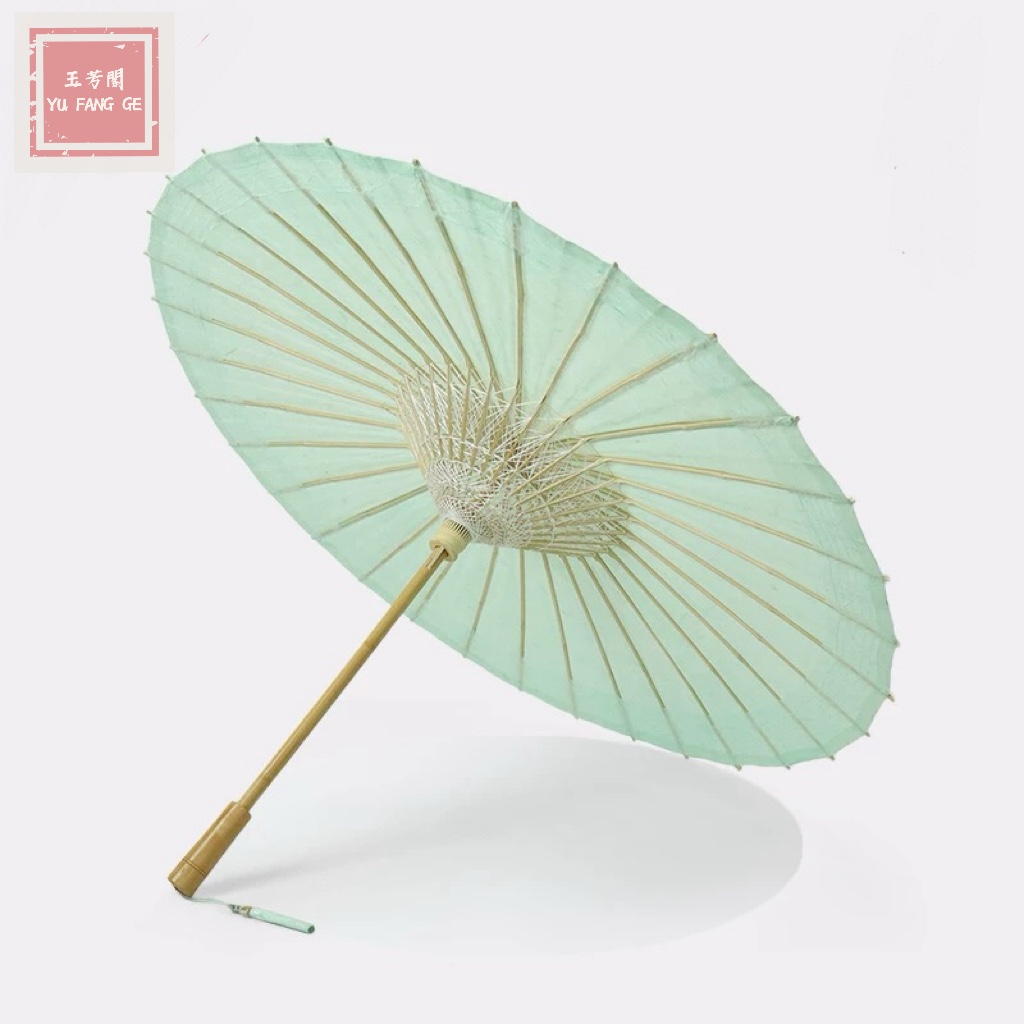
Oiled paper umbrella
History of Chinese oiled paper umbrellas
Oiled paper umbrella has a long history, full of rich cultural connotation and skill inheritance.
In the late Spring and Autumn period (770 BC to 476 BC), Lu Ban’s wife Yun Shi saw that her husband often got wet working in rainy days, so she skillfully used bamboo and animal hides to make the first rain gear which was the prototype of the oil-paper umbrella. This invention not only solved Lu Ban’s problem of working on rainy days, but also marked the beginning of the history of oil-paper umbrellas.
During the Eastern Han Dynasty (25 AD to 220 AD), CAI Lun invented the technique of paper making, providing an entirely new material for the manufacture of oiled paper umbrellas. People began to use paper as the umbrella surface and coated it with cooked tung oil to enhance the waterproof performance.
By the Tang Dynasty (618 AD to 907 AD), the use of oil-paper umbrellas was very common, and there appeared a special oil-paper umbrella with rice paper as the umbrella surface, and painters wrote and painted on the umbrella surface. This kind of oiled paper umbrella not only has practical value, but also has artistic value, and became a fashion in society at that time.
……
Suzhou embroidery
Overview of Suzhou embroidery
Suzhou embroidery, referred to as Su embroidery, is a traditional folk art from Suzhou, Jiangsu Province, with a history spanning over 2,000 years. Its distinctive style and charm were established as early as the Sui and Tang dynasties (581 AD to 907 AD). By the Song and Yuan dynasties (960 AD to 1368 AD), the basic techniques and characteristics had begun to take shape. During the Ming and Qing dynasties (1368 AD to 1644 AD), Su embroidery reached its peak, particularly flourishing in the Qing dynasty. Renowned for its “fine, elegant, and clean” qualities, many of the royal household’s everyday embroidered items or art pieces were crafted by Su embroidery artisans. Suzhou became known as the “Embroidery Market.”
The primary materials used in Su embroidery are the base fabric and embroidery threads. The tools include embroidery frames, benches, needles, and handboards. The process involves designing embroidery patterns, drawing sketches, dyeing threads, mounting the fabric, pinning the patterns, matching threads, embroidering, unmounting, and framing. There are over forty different stitching techniques categorized into nine main types, each unique. Su embroidery is characterized by its beautiful patterns, ingenious designs, meticulous workmanship, lively stitches, and elegant colors, reflecting strong regional features.
……
Sachet
History of Chinese Scented Sachets
The use of scented sachets in China dates back over 2,000 years, with their origins traced to the Han Dynasty (206 BC – 220 AD). Initially, these sachets served both practical and symbolic purposes. They were used to ward off insects, improve the smell of clothing and surroundings, and as amulets for protection against evil spirits and diseases.
During the Tang (618 AD – 907 AD) and Song (960 AD – 1279 AD) dynasties, the practice of wearing scented sachets became increasingly popular, especially among the nobility and upper classes. These periods saw a flourishing of arts and culture, and scented sachets were often exquisitely crafted and embroidered, reflecting the aesthetic preferences of the time.
In the Ming (1368 AD – 1644 AD) and Qing (1644 AD – 1912 AD) dynasties, the craft of making scented sachets continued to evolve.
……
Chinese style handmade jewelry
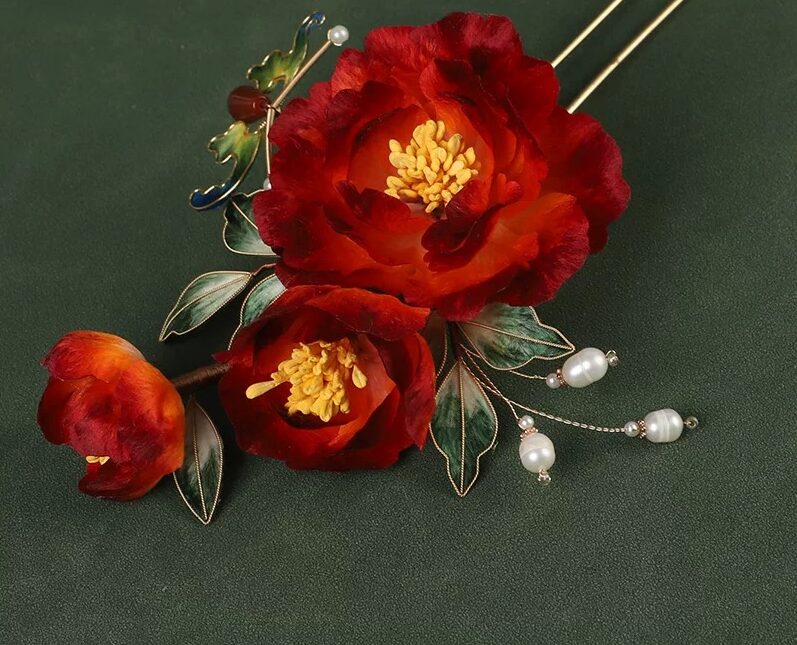
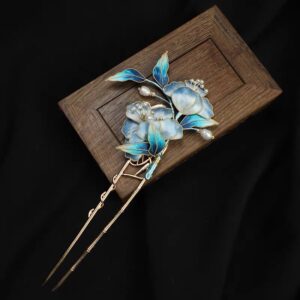
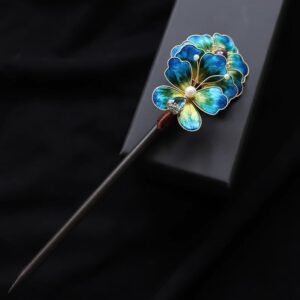
Inspired by China’s Seven Traditional Craftsmanship Techniques, the Chinese Style Handmade Jewelry Collectionembodies the soul of ancient artistry and cultural symbolism. Each piece is meticulously crafted, integrating time-honored techniques such as filigree inlay, cloisonné enamel, hand-carved jade. These techniques, passed down for centuries, reflect the depth of Chinese heritage and the pursuit of ultimate craftsmanship.
Beyond technique, this collection is enriched with profound Chinese cultural elements. Symbols of prosperity and protection—such as the phoenix, gourd, and peony—are delicately woven into the designs, each carrying centuries-old meanings of fortune, longevity, and nobility. The collection also incorporates culturally significant materials like cinnabar, Hetian jade, and natural pearls, treasured for their spiritual and healing properties.
New Chinese style Bags
Guangdong Gauze Collection
As one of China’s most treasured traditional fabrics, Guangdong Gauze (香云纱) has been a symbol of refinement and craftsmanship for centuries. Known as the “soft gold” of fabrics, this unique material originates from Guangdong and is celebrated for its intricate dyeing process using natural river mud, which enhances its durability and gives it a distinctive, luxurious sheen.
The Guangdong Gauze Collection brings this rare heritage to a global audience, blending traditional craftsmanship with contemporary handbag design. The fabric’s natural softness, lightweight texture, and timeless beauty make it a prized material in high-end fashion, recognized internationally for its eco-friendly production and artistic value.
Song Brocade Collection
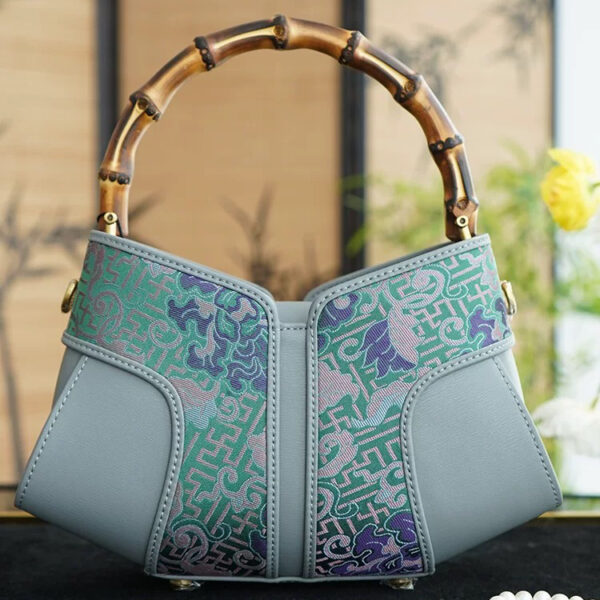
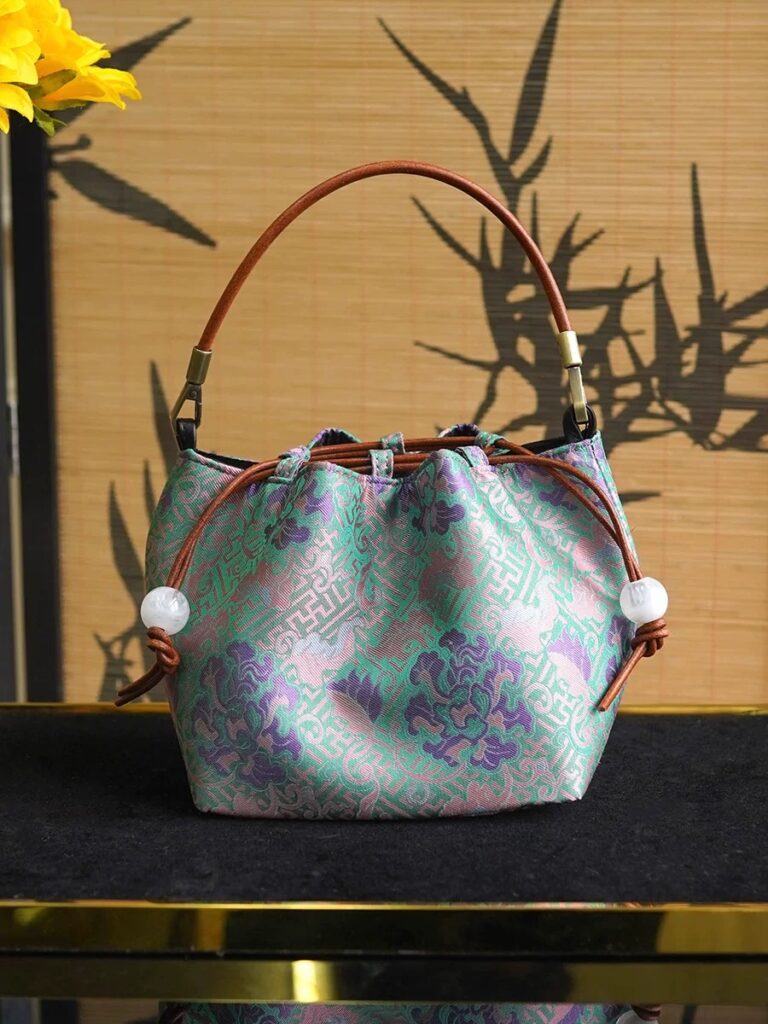
Song Brocade (宋锦) is one of China’s Three Great Brocades, recognized as an Intangible Cultural Heritage by UNESCO. With its origins tracing back to the Song Dynasty, this intricate silk fabric has been prized for centuries for its exquisite craftsmanship, delicate weaving techniques, and elegant patterns inspired by ancient Chinese aesthetics.
The Song Brocade Collection honors this prestigious textile by transforming its luxurious beauty into elegant handbags, allowing the legacy of Chinese artistry to be carried beyond borders. Revered by textile experts and collectors worldwide, Song Brocade has gained international acclaim for its unmatched quality, historical significance, and its role in defining luxury fashion.
Yun Brocade Collection
Yun Brocade (云锦), the most luxurious of China’s Three Great Brocades, was once exclusively woven for Chinese emperors and high-ranking officials. With a history spanning over 1,500 years, Yun Brocade is renowned for its handcrafted gold and silver thread embroidery, intricate patterns, and elaborate weaving process, requiring highly skilled artisans to produce even a small section.
The Yun Brocade Collection carries forward this imperial heritage into the world of contemporary fashion. Recognized by luxury designers and museums worldwide, Yun Brocade is a symbol of China’s rich textile history and has been displayed in international exhibitions as an unparalleled masterpiece of fabric artistry. This collection invites you to own a piece of this timeless cultural treasure, redefined for the modern era.